
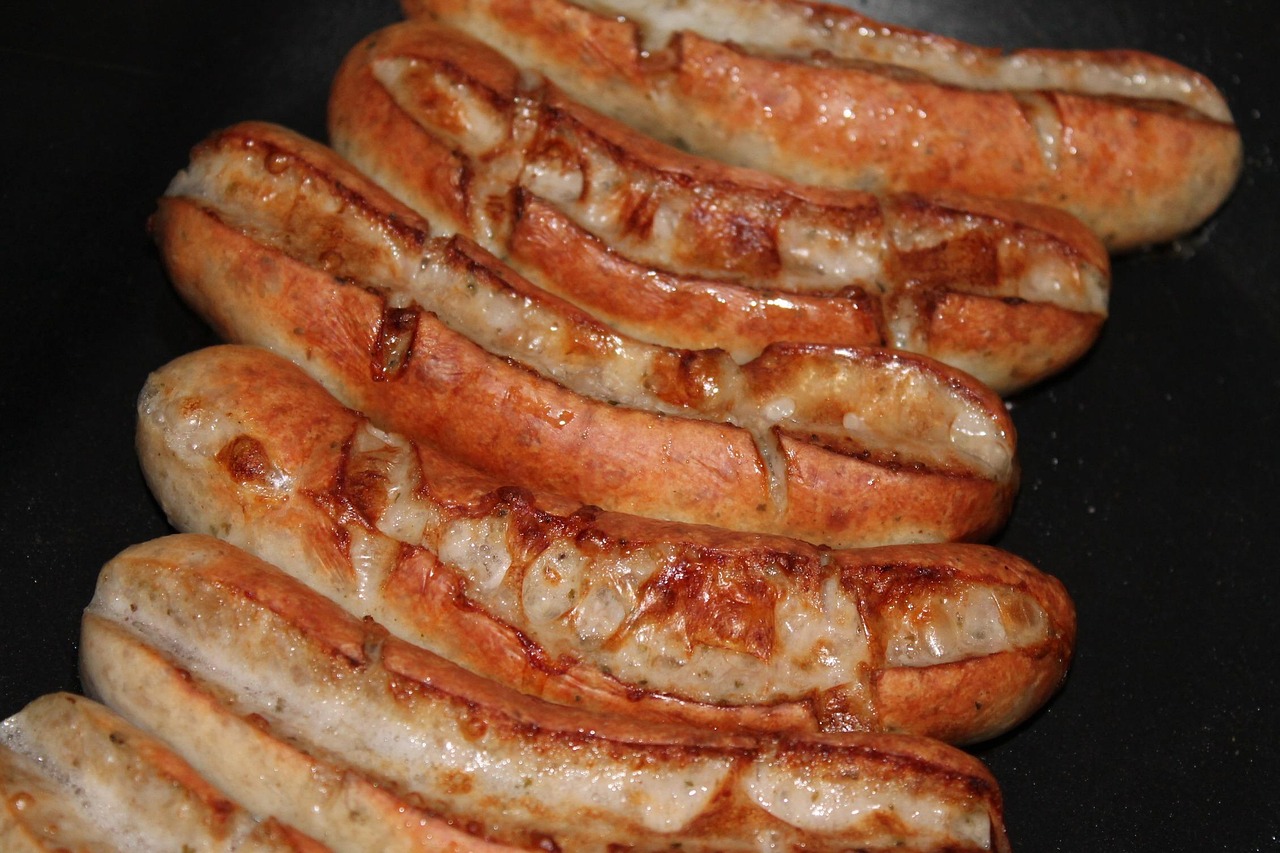
My neighbor Dave has one rule for his annual Fourth of July cookout: brats only. No burgers, no hot dogs. Just a cooler of cold beer and a grill full of bratwurst. Every year someone grumbles about it. Every year, by the second round, nobody’s complaining.
That’s the quiet power of a good brat. It doesn’t need a backstory or a fancy preparation. It just needs heat, a little patience, and someone who knows what they’re doing. If that’s not you yet, it will be by the end of this.
What Makes a Bratwurst a Bratwurst?
The name is German — brat means finely chopped meat, wurst means sausage. Bratwurst sausage is traditionally made from pork, veal, or beef, seasoned with spices that vary by region: nutmeg, caraway, ginger, white pepper, coriander. The seasoning profile is why a Wisconsin brat and a Nuremberg brat taste like cousins rather than twins.
In the U.S., brats became a Midwest staple — particularly in Wisconsin, where the German-American community brought the tradition and never let it go. Today you’ll find them at every grocery store, in fresh or pre-cooked form, and on menus far beyond the Midwest.
The baseline serving is still the best starting point: bratwurst sausage in a sturdy bun, yellow or stone-ground mustard, sauerkraut or grilled onions. Build from there once you know what you’re working with.
One thing worth knowing: fresh brats and pre-cooked brats are not interchangeable on the grill. Fresh brats need time and lower heat to cook through without splitting. Pre-cooked brats just need color and warmth. Check the label before you fire anything up.
Beer Bratwurst – Why the Method Matters
Beer bratwurst is a cooking method, not a product. You simmer raw brats in beer — typically a lager or pilsner — with sliced onions, butter, and sometimes garlic before finishing them on the grill. It’s a two-step process, but there’s a real reason it stuck around.
The beer bath brings the internal temperature up slowly and keeps the casing from splitting under direct grill heat. The fat stays inside the sausage. The onions absorb the beer and the rendered pork fat. By the time the brat hits the grill, you’re just adding color, not cooking from raw — which means less guessing, fewer burst casings, and a noticeably juicier result.
A few practical notes:
- Simmer, don’t boil — a rolling boil toughens the casing and dries out the meat
- Use a beer you’d drink — the flavor concentrates as it reduces, so cheap and bitter gets worse
- Save the beer-braised onions — they’re better than anything you’d put on a burger
- For a crowd, use a foil pan on the grill’s side burner so the main grates stay free
Editor’s take: Most people overcomplicate the beer choice. A Miller High Life or Spotted Cow works. What matters more is the onion-to-beer ratio — you want enough onion that they go soft and sweet in the bath, not just float around.
Brat in the Air Fryer – Not a Shortcut, Just a Different Tool
There’s a version of this article that calls air fryer brats a “game-changer.” This isn’t that article. But cooking a brat in the air fryer is genuinely useful and produces a better result than most people expect, so it deserves an honest look.
At 370°F for 12 to 15 minutes, a pre-cooked brat comes out with a snappy, browned casing and a hot, juicy interior. The air fryer circulates heat evenly, so you don’t get the hot-spot burning you’d get from a pan on high heat. You also don’t get any char or smoke flavor, which is the trade-off.
It’s the right move when:
- It’s a weeknight and you’re feeding one or two people
- Weather rules out the grill
- You want something fast that doesn’t involve watching a pan
Editor’s take: Don’t pierce the casing before air frying — that’s how you lose all the juice. Let it rest two minutes before cutting. And if you want to cook peppers and onions alongside, toss them in the basket at the start; they’ll be done at the same time the brat is.
Pineapple Brat – Worth More Than the Novelty Label
Pineapple brats get dismissed as a gimmick. They’re not.
The sweet-savory combination isn’t new or strange — pork and fruit have been paired for centuries across dozens of cuisines. What makes a pineapple brat work is that the acidity in the pineapple cuts through the fat in the pork sausage, and the natural sugars caramelize on a hot grill in a way that plain pork doesn’t. The result is a brat with more layered flavor than a standard link, not a dessert disguised as dinner.
Best served:
- Grilled over direct heat so the sugars get color without burning
- With teriyaki glaze brushed on in the final two minutes
- Topped with grilled red onion and jalapeño for heat contrast
- Swapped into a Hawaiian-style bun with sriracha mayo instead of mustard
Editor’s take: Put pineapple brats out at a cookout without announcing what they are. By the time someone asks, they’ll already be reaching for a second one. The reveal lands better that way.
Which Brat Should You Actually Buy?
The occasion drives the decision more than personal preference. Here’s how to think about it:
- Feeding a crowd at a tailgate or cookout: classic bratwurst sausage, beer bath method, done
- Quick weeknight dinner: pre-cooked brat in the air fryer, 15 minutes, minimal cleanup
- Summer cookout where you want to stand out: pineapple brat on the grill, teriyaki glaze optional but recommended
- Want something smokier with a garlic-forward profile: grab kielbasa alongside your brats — they cook similarly and give people a choice
Brats are one of the more forgiving proteins to cook. They’re hard to ruin if you manage your heat, they pair with almost everything, and they scale up easily for groups. The main thing people get wrong is cooking them too hot and too fast — patience is the actual skill here.
Keep a pack in the fridge. Pick up a six-pack to go with them. That’s most of what you need to know.