
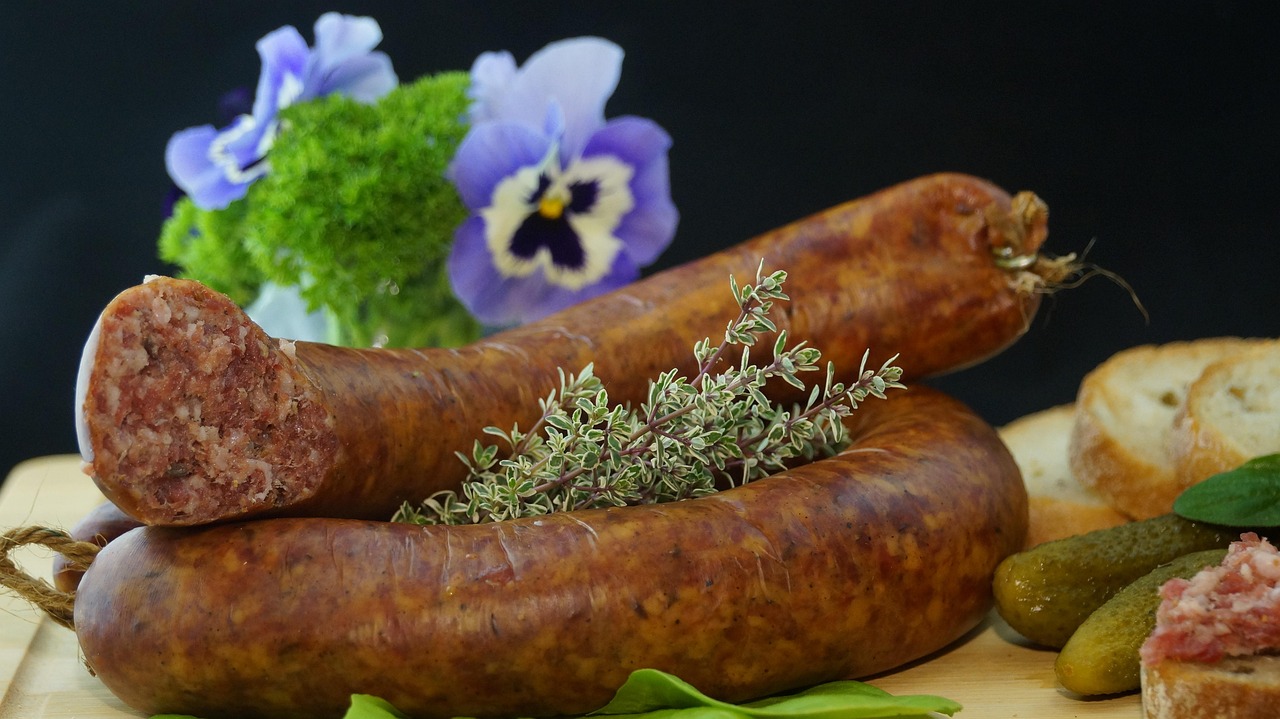
There’s a useful test for whether andouille matters in a recipe. Make the dish once with a generic smoked sausage. Make it again with actual andouille. The first version will be fine — edible, seasoned, nothing wrong with it. The second version will taste like the dish was supposed to taste. The gap between those two pots is what andouille does.
It’s not interchangeable with other smoked sausages, even good ones. The spice profile, the smoking process, and the coarse grind all do specific work in Cajun and Creole cooking. Understanding what that work is makes you a better cook, not just a better shopper.
What Actually Makes Andouille Different?
Andouille started in France as a coarsely ground pork sausage. Louisiana Cajun and Creole cooks took that base and fundamentally changed it — more garlic, more spice, and a much more aggressive smoking process. Some traditional Louisiana andouille is smoked twice, often over pecan wood or sugar cane, which builds a smoke character that goes well past what you get from a standard smoked link.
In practical cooking terms, andouille has structural presence. It doesn’t dissolve into a dish or quietly add background flavor. It changes the dish around it — the broth, the sauce, the fat in the pan. That’s why gumbo made without it tastes like a different recipe, not just a lighter version of the same one.
The spice level varies by brand and region, but the heat is real. If you’re cooking for people with low heat tolerance, use less andouille rather than swapping it out entirely. Half the amount still does significant flavor work.
Editor’s take: In a roux-based dish, andouille’s rendered fat becomes part of the flavor foundation. Brown it first in the pot before you build anything else, and the seasoning from the sausage seasons the whole base. Skip that step and you lose something that no amount of added spice fully replaces.
Andewy Sausage, Endue Sausage, Andou Sausage – Same Thing, Different Spelling
Andouille is pronounced ahn-DOO-ee. The French spelling offers almost no phonetic help, which is why it gets searched and written as andewy sausage, endue sausage, andou sausage, and a handful of other reasonable guesses. These aren’t wrong — they’re what happens when a word travels from French kitchens to American grocery store shelves and most people encounter it by taste before they see it written.
The mispronunciation is so common that most butchers and meat counter staff hear every version of it daily. “The spicy Cajun sausage” gets you the right product just as reliably as the correct pronunciation. What matters is knowing what you’re looking for on the label, since andouille can share a refrigerator case with sausages that look similar but cook very differently.
Editor’s take: Look for “Louisiana-style andouille” or “Cajun andouille” specifically on the label. Generic “smoked sausage” from the same cooler will be milder, less aggressively spiced, and won’t produce the same result in a gumbo or jambalaya. The label distinction is worth reading.
Andouillette Sausages – Related in Name, Not in Practice
Andouillette sausages are the French predecessor to Louisiana andouille, and they are a genuinely different product. French andouillette is made from pork intestines and tripe, has a very strong, fermented-forward aroma, and is considered a delicacy in France for exactly the reasons that make it challenging for most people who haven’t grown up eating it.
The confusion happens because the names look similar and both trace back to the same French sausage tradition. Louisiana cooks took the name and the concept, replaced the offal-based filling with coarsely ground pork shoulder and spices, heavily smoked it, and created something that’s now more widely eaten than the original it’s named after.
If you’re in France, andouillette sausages are worth trying once with genuine curiosity. If you’re shopping for a Cajun recipe, verify the label carefully — the two look similar enough in packaging to cause a confusing and expensive mistake.
Editor’s take: The andouillette experience is polarizing in a way that’s hard to overstate. People who love it really love it. People who don’t are usually done after the first bite. If you’re curious, try it at a restaurant in France before committing to a full link at home.
Chicken Andouille Sausage – Same Spice Profile, Less Fat
Chicken andouille sausage applies the Louisiana spice blend and smoking method to chicken instead of pork. The fat content drops significantly — typically 30 to 40 percent less than pork andouille — but the heat, the garlic, and the smoke stay. In a heavily seasoned dish like gumbo or jambalaya, the switch from pork to chicken andouille is subtle enough that most people won’t detect it.
Where the difference shows up is in fat rendering. Pork andouille releases fat into the dish as it cooks, which adds richness and carries the spice into the surrounding ingredients. Chicken andouille renders considerably less, which means you’ll want to add a small amount of oil or butter to compensate if you’re building a roux or sautéing aromatics in the same pan.
It’s also a practical choice when serving people who don’t eat pork. On a mixed sausage platter alongside turkey sausage, chicken andouille gives guests a spiced, smoked option without pork, while the turkey sausage covers the milder, leaner end of the spectrum.
Editor’s take: Chicken andouille is the right call for a weeknight jambalaya when you want full Cajun flavor without a heavy meal sitting with you for the rest of the evening. Build it the same way — same technique, same trinity, same seasoning — and the result is satisfying without being rich.
How to Cook Andouille and Actually Use It Well
Andouille is sold fully cooked and pre-smoked. You’re not cooking it through — you’re developing color and releasing the fat and flavor into whatever it’s cooking with. How you apply heat matters more than how long.
Where it works best and why:
- Gumbo: brown the sliced rounds in the pot first before anything else — the rendered fat seasons the pot and becomes the base flavor layer before the roux goes in
- Jambalaya: sauté with the holy trinity before the rice so the spice distributes into the vegetables and carries through the whole dish evenly
- Pasta: slice thin, brown hard in a dry skillet, then fold into cream or tomato sauce — the crisp edges hold up better than soft slices and add texture
- Grilled: score shallowly to prevent bursting, medium-high heat, serve in a sturdy bun with whole grain mustard and pickled jalapeños
- Breakfast skillet: dice and crisp in a dry pan until the edges brown, then scramble eggs directly into the pan — the spiced fat left in the pan seasons the eggs without any additional seasoning needed
One thing worth knowing: andouille is strong. A full link in a dish built for four people is often more than enough. If you’re cooking for people who run mild on heat tolerance, use three-quarters of what the recipe calls for and taste as you go. The sausage will still carry the dish.
Keep a link in the freezer. Red beans and rice on a Wednesday night with sliced andouille is one of the better quick dinners in the Southern canon, and it takes about thirty minutes from a cold start.