
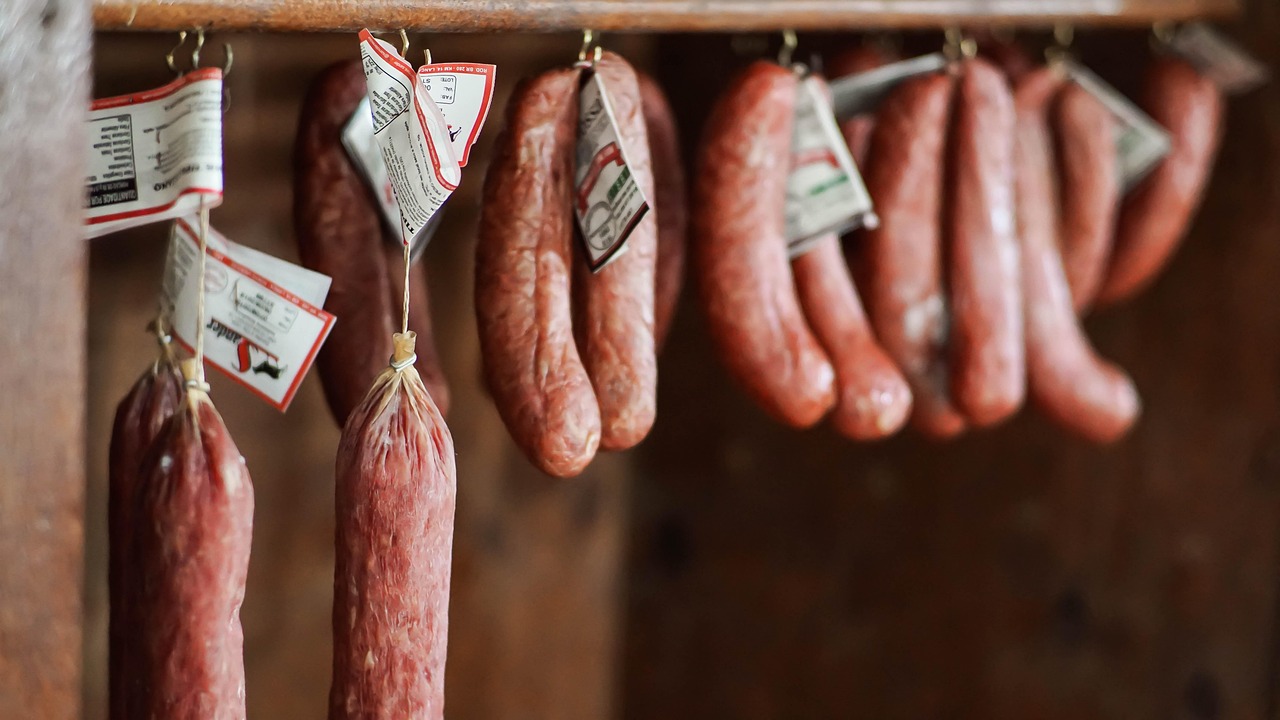
A friend once tried to recreate his grandmother’s Sunday sauce using a generic smoked sausage because it was what he had. The sauce was fine. He knew it was fine. He also knew it wasn’t right. What was missing wasn’t the pork — it was the fennel. That’s the thing about Italian sausage: the seasoning is the whole point.
The fennel and garlic don’t just season the sausage. They season everything around it — the tomatoes, the broth, the fat in the pan. That’s why Italian sausage shows up in so many foundational recipes and why substituting it changes the dish in ways that are hard to compensate for. There are also several distinct varieties, and they don’t all behave the same way. Here’s how to tell them apart and use each one well.
What Actually Defines Italian Sausage?
Italian sausage is pork seasoned with fennel seeds, garlic, and herbs. That fennel is the identifier. It’s what makes Italian sausage taste like Italian sausage rather than a bratwurst or a smoked link. When a recipe calls for it specifically, fennel is what the dish was built around.
It comes in links or loose bulk form, fresh or pre-cooked, and in multiple heat levels. The variety matters more than most people realize. Using hot sausage in a recipe developed for sweet Italian, or links in a dish that calls for crumbled ground sausage, changes the result in ways that can’t always be recovered.
Editor’s take: When a recipe just says “Italian sausage” without specifying, it was almost certainly developed with sweet Italian as the default. Start there. Add heat separately with red pepper flakes if the dish needs it, rather than assuming hot sausage is an equivalent swap.
Sweet Italian Sausage – Misnamed, Not Misunderstood
“Sweet” doesn’t mean sugary. It means no added heat. Sweet Italian sausage is the baseline — the fennel-and-garlic flavor of Italian sausage at full volume, without chili or red pepper competing with it. Most experienced cooks default to this variety because it works across the widest range of dishes without pushing one flavor to the front.
Where it performs best:
- Lasagna, stuffed shells, and baked pasta where the sausage is one flavor among several
- Grilled in a hoagie roll with caramelized peppers and onions — the classic combination for a reason
- On a summer grill alongside smoked sausage — the fennel brightness of the Italian plays well against the deeper, woodsmoke character of a smoked link
- Sunday sauce where you want the sausage flavor to carry through the whole pot over a long simmer
Editor’s take: Brown sweet Italian links in the same pan you’ll build your sauce in, and don’t wipe out the fat before you add the tomatoes. The rendered drippings — fennel, garlic, pork fat — are where the sauce gets its backbone. Starting in a clean pan after browning is the most common reason a homemade marinara tastes thin.
Hot Sausage and Spicy Italian Sausage – The Same Thing, Two Labels
Hot sausage and spicy Italian sausage are the same product sold under different names depending on the brand and region. Both use the same fennel-and-garlic base as sweet Italian, with crushed red pepper or chili flakes added. The heat isn’t a separate element — it’s built into the fat of the sausage, which means it distributes through whatever it’s cooking with as it renders.
That distribution is what makes spicy Italian sausage genuinely useful rather than just an option for people who like heat. In a marinara simmered for 20 minutes, the heat from the sausage becomes the background warmth of the whole sauce — something you can’t replicate by adding red pepper flakes at the end.
Best applications:
- Spicy marinara where the heat builds into the sauce as the sausage fat renders over time
- Pizza, crumbled thin, where it crisps under the cheese and concentrates in flavor
- White bean or lentil soup where the fat carries the spice into the broth over a slow simmer
- Combined half-and-half with sweet Italian in a sauce when cooking for a table with mixed heat preferences
Editor’s take: The half-and-half method — one sweet link and one hot link per pound of sausage — is the practical solution for mixed-tolerance households. You get the full fennel-and-garlic flavor with heat present but not aggressive, and you don’t have to cook two separate proteins.
Ground Sausage – The Format That Distributes Flavor Best
Ground sausage is Italian sausage without the casing — the same meat, the same seasoning, sold loose in bulk. The difference is distribution. A link stays in a single location in the dish. Ground sausage goes everywhere.
In a pasta sauce, crumbled ground sausage means every forkful has sausage flavor rather than an occasional chunk of it. In a lasagna, it layers through the whole dish. On a pizza, small crumbles crisp at the edges under oven heat in a way that sliced links simply don’t.
Where it’s the better format choice over links:
- Pasta sauces where you want sausage flavor in every bite, not just where the pieces land
- Stuffed mushrooms or stuffed peppers where the filling needs to compact into a cavity
- Homemade pizza where thin crumbles crisp under the cheese better than sliced rounds
- Soup and stew where you want the fat and spice to render into the liquid rather than stay concentrated in chunks
Editor’s take: If your store only carries links, score the casing lengthwise and squeeze the meat out. It’s the exact same product as bulk ground sausage — no flavor difference, no quality difference. Don’t pay more for the bulk version when links are cheaper or on sale.
Turkey Italian Sausage and Italian Chicken Sausage – Leaner Without Being Weaker
Both turkey Italian sausage and Italian chicken sausage keep the fennel-and-garlic seasoning and swap the pork for a leaner base. Fat drops by roughly 30 to 40 percent. In dishes where the sausage is surrounded by sauce, cheese, or broth, most people don’t notice the difference. In simpler preparations — grilled plain, served as a link without much else — the leaner base is more apparent.
They’re not identical products, and they don’t behave identically:
- Turkey Italian sausage: closest to the pork version in flavor and application — works in sauces, lasagna, and soups with minimal adjustment; use medium heat and don’t overcrowd the pan
- Italian chicken sausage: often sold in flavored varieties (spinach and feta, roasted garlic) that lean into the lighter base; better suited for sheet-pan dinners, grain bowls, and lighter pasta dishes
- Both: render less fat, so add a small amount of oil to the pan when browning; without it, leaner sausages stick and develop uneven color
Editor’s take: If you’re making the switch from pork and worried it will be noticeable, use hot turkey Italian sausage in a tomato sauce rather than sweet. The red pepper heat masks the leaner base better than the mild version does, and after 20 minutes of simmering in tomatoes, most people can’t pick it out.
How to Cook Italian Sausage Correctly
The most common mistake is cooking Italian sausage over high heat. High heat splits the casing, pushes fat out before it can flavor the dish, and leaves you with a browned exterior over an undercooked or dried-out interior. The sausage looks done before it is.
Method guide by application:
- Skillet links: medium heat, turn every 3 to 4 minutes, 15 to 18 minutes total for fresh links — internal temperature of 160°F
- Grill: medium heat with indirect zones available, score fresh links shallowly to manage any bursting, turn frequently rather than leaving them stationary
- Ground sausage in sauce: medium-high to brown, breaking it up as it cooks, don’t drain all the fat — leave the drippings in the pan before adding tomatoes
- Sheet pan: 400°F for 20 to 25 minutes, links or rounds, vegetables in the same pan so they pick up the rendered fat
Italian sausage rewards patience in every format. The fat and spice need time to move into the dish. Rush it and you get a cooked sausage sitting next to everything else. Give it time and you get a dish where everything tastes like it was meant to be together.