
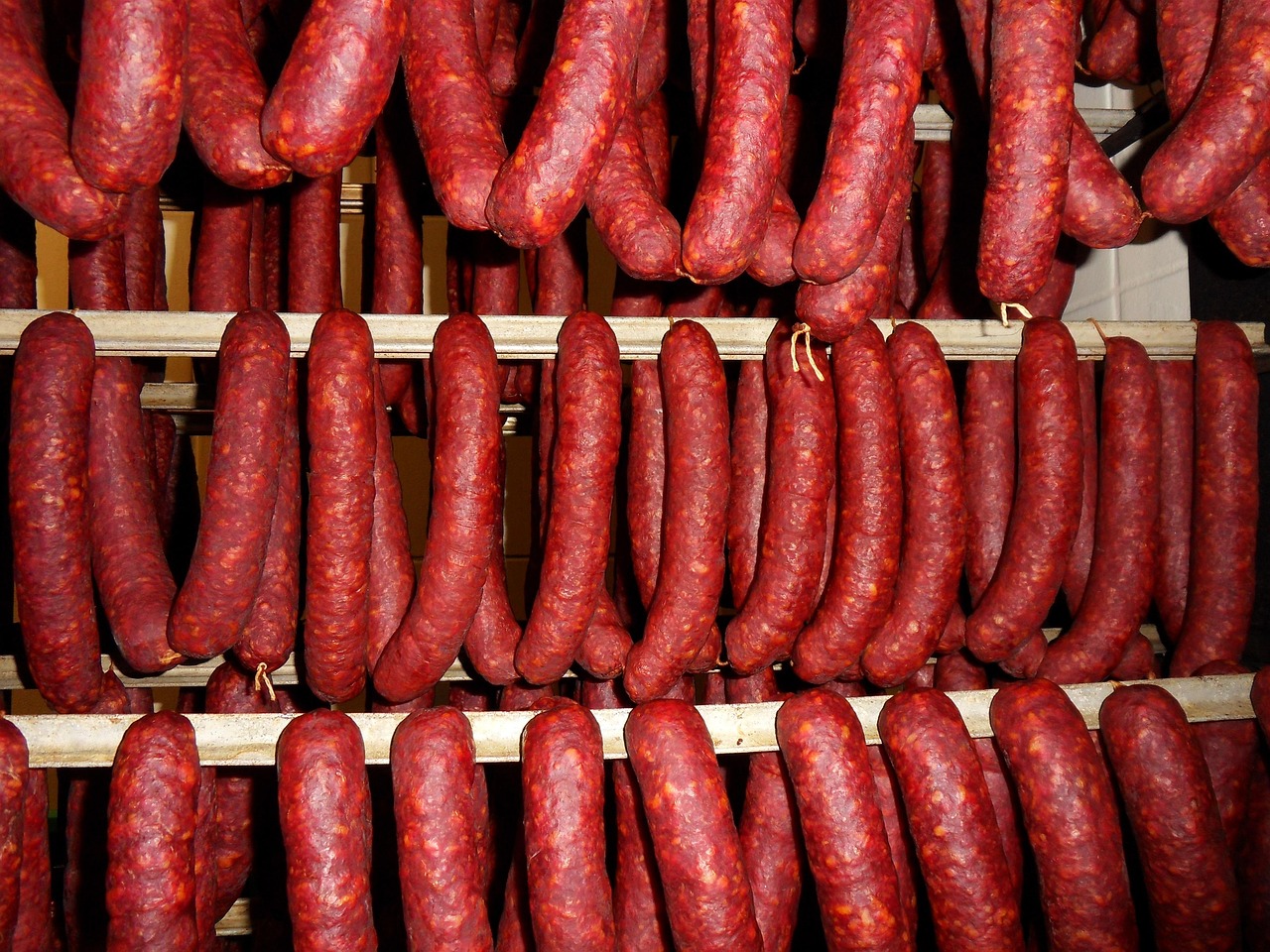
The first time I handed someone from outside Louisiana a link of boudin, they looked at it like it owed them an explanation. It didn’t slice. It didn’t behave like sausage they’d eaten before. I told them to just squeeze it onto a cracker. That was the last question they asked — about the next twenty minutes, they were busy eating.
Boudin is genuinely unlike any other sausage in the American repertoire. It’s pork and rice and Cajun seasoning stuffed into a casing, and the rice changes everything about how it eats, how it cooks, and what you can do with it. People who grow up with it don’t think of it as unusual. People who discover it as adults tend to wonder where it’s been their whole life. Here’s what you need to know.
Why Boudin Doesn’t Cook or Eat Like Any Other Sausage
Standard sausage is ground meat, fat, and spice stuffed into a casing. Boudin is something structurally different: cooked pork and cooked rice mixed with onions, peppers, green onions, parsley, and seasoning, then stuffed while still warm. The rice isn’t a filler — it’s half the recipe. It absorbs the fat from the pork, carries the seasoning, and gives the filling its soft, almost loose consistency.
That’s why you can’t slice it like a bratwurst or a kielbasa. The interior doesn’t hold together as a firm, sliceable mass. You squeeze it from the casing or eat the link whole. There is no third option that works cleanly.
Flavor varies significantly between makers. Some Cajun butchers run their boudin mild and savory. Others season it aggressively enough that it has real heat. The spice level is as much a signature as the pork-to-rice ratio, and in Louisiana, people have strong opinions about whose version is correct.
Editor’s take: If your frame of reference is chorizo — dense, meaty, boldly spiced with no filler — boudin will feel like a completely different category, because it is. The rice changes the fat ratio, the texture, and how the spice registers on the palate. Go in without comparisons and you’ll appreciate it more.
Cajun Boudin – The Version Everything Else Is Measured Against
Cajun boudin starts with pork shoulder or pork butt, braised until completely tender. The cooked meat gets chopped or pulled, then mixed with cooked rice, green onions, parsley, and a Cajun spice blend while everything is still hot. That’s critical — the filling gets seasoned warm, because cold filling absorbs and mutes spice differently. Then it’s stuffed into natural hog casings and tied into links.
Some makers add pork liver for richness and depth. Others skip it entirely. Both are legitimate versions and neither is the “right” one — it depends on the cook and the tradition they’re working from.
In southwest Louisiana, Cajun boudin is sold fresh and hot from butcher shops and gas stations, wrapped in foil, eaten in the car or on the tailgate. That’s not a romantic detail — that’s genuinely how most of it gets consumed. The setting is part of the experience.
How it’s typically eaten:
- Squeezed from the casing onto saltines with hot sauce — the most common approach
- Eaten whole, casing included, when the casing is thin enough to be tender — varies by maker
- Crumbled into scrambled eggs in the morning as pre-seasoned breakfast meat
- Used as a stuffing for bell peppers, pork chops, or chicken — the filling is already fully seasoned, so it does the work
Editor’s take: Never try to slice Cajun boudin into neat rounds. The rice interior falls apart the moment the casing is cut. Squeeze or eat whole — two methods, both correct. Anything else leaves you with a mess and less sausage than you started with.
Crawfish Boudin – Two Louisiana Traditions in One Casing
Crawfish boudin replaces the pork with crawfish tails — same rice base, same Cajun seasoning framework, same casing format. What changes is the flavor profile: crawfish tails are leaner than pork shoulder and have a sweet, slightly briny character that carries through the rice differently than pork fat does.
Availability follows crawfish season, which peaks from January through June. Outside that window, you can find it at some specialty shops year-round, or order it from a Louisiana supplier if you’re not in the region. The shipping cost is worth it at least once if you’re curious.
Crawfish boudin is also the variety most commonly made into boudin balls — the filling shaped into a sphere, breaded, and deep-fried. The crispy exterior against the soft, seasoned crawfish-and-rice filling is a strong argument for why deep frying exists.
Editor’s take: Crawfish boudin tastes milder and slightly sweeter than pork boudin because crawfish has less fat than pork shoulder, and fat carries spice. If your first bite seems underseasoned relative to what you expected, that’s the protein at work, not a bad batch. A few dashes of hot sauce brings the heat up and the balance falls into place.
Boudin Links – Heat Them Without Splitting Them
Boudin links are the standard retail and restaurant format. Because the filling is already cooked, your only real task is heating them through without bursting the casing. That sounds simple. It’s a little more specific than it sounds.
The casing is thin and delicate. High direct heat splits it fast, and when it splits, the filling spills out and dries against the grill or pan before you can do anything about it. The methods that actually work:
- Steam or poach: bring water to a low simmer — not a boil — and warm the links 10 to 12 minutes; gentlest method, best for keeping the casing intact
- Grill: medium-low heat, turn frequently, watch the casing closely and pull before any split forms
- Oven: 325 to 350°F for 20 to 25 minutes — low and slow keeps everything together and the filling stays moist
- Microwave: wrap in a damp paper towel, 45 to 60 seconds; functional in a time crunch, not ideal for texture
Editor’s take: The best result comes from combining two methods: steam the links first until heated through, then finish 2 to 3 minutes per side over medium grill heat. The steam handles food safety and moisture. The grill handles color and the slightly crisped casing that makes the eating experience better. Neither method alone does both jobs as well.
Making Boudin at Home – A Real Commitment with a Real Payoff
Making boudin at home is a half-day project on the short end. The pork has to be braised until it falls apart — two to three hours minimum. Then the filling gets mixed, seasoned, and stuffed while hot. Then the links are tied and cooled. It’s not a weeknight recipe. It’s a weekend project, ideally done in a large batch so the effort pays off across multiple meals and the freezer gets stocked.
The payoff is real. Homemade boudin is typically more aggressively seasoned and fresher-tasting than anything sold at a grocery store outside Louisiana. The filling — before it goes into casings — is also a useful byproduct: it works as a stuffing for chicken thighs, pork chops, or roasted bell peppers without any additional prep.
What makes or breaks the batch:
- Braise the pork until it pulls apart without resistance — undercooked pork produces dense, difficult-to-stuff filling
- Season while the filling is still hot — the rice absorbs spice differently at temperature, and what tastes well-seasoned warm will taste flat once it cools
- Use natural hog casings rinsed well in cold water — collagen casings work but produce a tougher bite
- Don’t overstuff — the filling expands when heated and an overstuffed link will split at the first sign of heat
Editor’s take: The most critical step in making boudin — and the one most home recipes underemphasize — is tasting and adjusting the filling while it’s still hot. Cold filling dulls spice perception because the fat coats the palate at low temperature and mutes heat. What tastes right cold will taste underseasoned on the plate. Season hot, taste hot, adjust hot.